Bill Neal’s Hush Puppies

Bill Neal tremendously important to the revival of Southern cooking in recent decades.  He co-founded and ran La Residence and Crook’s Corner in Chapel Hill, NC, and wrote several cookbooks.  He died far too young at 41, but has left a lasting legacy that extends to all regions of the South and many styles of cooking.  We recommend you read Sara Engram’s profile of Bill in Duke Magazine, “Some South for Your Mouth: How Corn Bread Cuisine Became Haute.”

“Neal approached the postlapsarian state of southern cooking as an anthropologist as much as a food writer.”
Book Forum

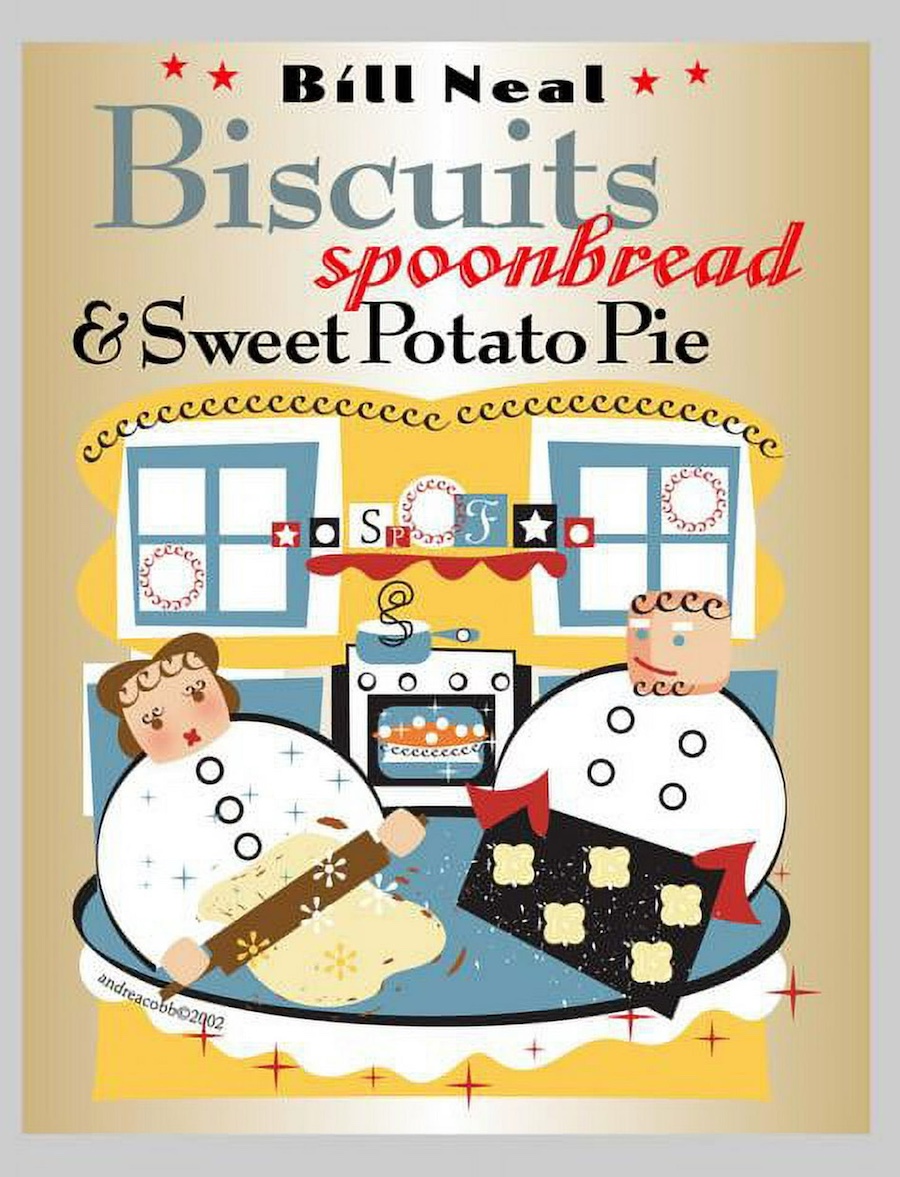
In his wonderful cookbook, “Biscuits, Spoonbread, and Sweet Potato Pie,” Bill Neal writes the definitive book on southern breads and pies.   His hush puppies are just the best.

“Hushpuppies are deep-fried cornmeal fritters and the classic accompaniment to outdoor fish fries and barbecues.  Some are little more than fried dough of the cornmeal dumpling variety, but most are enriched these days with eggs, butter, milk, and onion.  Almost every corn milling operation in the South puts out a hushpuppy mix and few cooks make hushpuppies from scratch.  For hush puppies from scratch, here is a typical recipe.

2 c. cornmeal
1 tsp. baking powder
1/2 tsp. baking soda
2/3 tsp. salt
2 tsp. sugar
1/8 tsp. black pepper
3/4 c. grated onion
1 egg
1 c. buttermilk
Fat for deep frying: shortening, lard, vegetable oil, or a combination

Sift together the dry ingredients.  Beat the onion, egg and buttermilk together; add to the meal mixture.  Beat well and let stand at room temperature for about 15 minutes.  Cook a test hushpuppy – drop by the large teaspoon into 350 degree F. deep fat.   Test after it has browned, in 2-3 minutes; if the hushpuppy is not cooked through, add a little more cornmeal to the batter.  If the outside is very rough and the inside too heavy, add a little buttermilk.  Proceed, cooking the puppies about 2-3 minutes until golden brown.  Drain on brown paper and serve immediately.  Recipe makes 36 hushpuppies.

From: Biscuits, Spoonbread, and Sweet Potato Pie: 300 recipes that celebrate the glories of Southern baking – with a generous accompaniment of historical lore, Bill Neal, originally published by Alfred A. Knopf, 1990 and now in paperback from University of North Carolina Press.


Another bite of biscuit heaven…

“Grazing is a state of being in the South. In fact, many of our community cookbooks from the twentieth century are front-heavy, with so many more hors d’oeuvre and finger-food recipes than main courses (or even desserts) that it makes you wonder why we even bother with the rest of the meal.  It’s actually plain good sense: as any southerner knows, a dizzying array of nibbles in view when your guests arrive is the utmost gesture of hospitality.”

The Lee Bros. Southern Cookbook (Stories and Recipes for Southerners and Would-be Southerners)

Alrighty folks, I know that I say everything I post on here looks irresistibly scrumptious, but really, can this delectible concept be beaten? Spicy! Sweet! Salty! Enjoy! (And if you follow this recipe we want to hear from you how it turned out. And then we want you to FedEx us some.)

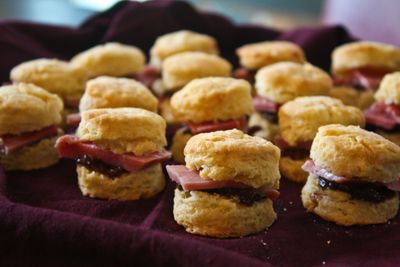
Buttermilk Biscuits with Kentucky Ham, Molasses Butter & Creole Chile Jam
(From Convivial.org)

One of my favorite Southern appetizers is a ham biscuit — Kentucky smoked ham on a buttermilk biscuit — it’s that simple.  However, because it’s only two things put together, the biscuits better be great and the ham even better.

A real, aged country ham is remarkably different in flavor and texture from a mass-produced ham.  An authentic country ham is considered the South’s prosciutto — it’s smoky, wild, gamy and salty.

Col. Bill Newsom’s Kentucky hams are hand-cured (nitrate & nitrite free) using a 200 year old family method, slow-smoked over hickory, and hung for several months to age.  This traditional, painstakingly long process is becoming a lost art.  Not mass-produced or distributed wholesale, these artisan hams are handled only 18 times before arriving at your door with a numbered certificate.   Foodies everywhere are grateful to Nancy Newsom Mahaffey (aka, the Ham Lady) for continuing her grandfather’s tradition.

Dryness tends to be a problem with just ham on biscuits, especially if they sit for any length of time…

For the complete article and the recipe (!) please click here.

The Science of The Southern Biscuit

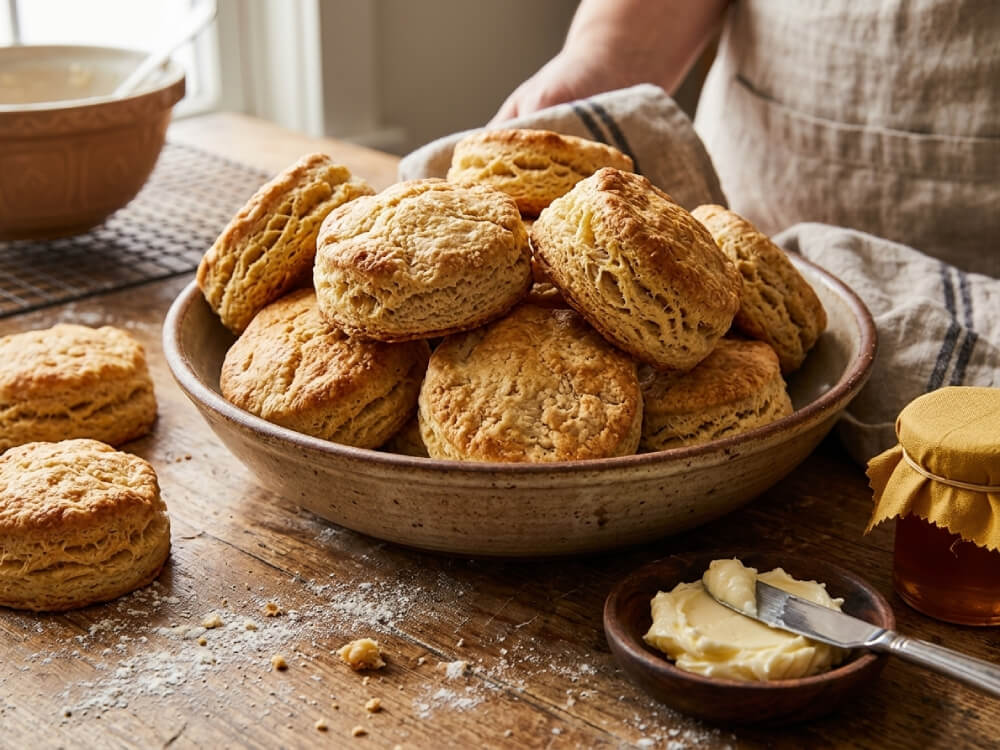
Creating the perfect biscuit is a theoretical question with as many answers as there are scientists racing toward finding a unified theory of Everything. With Knoxville’s first International Biscuit Festival on the horizon (June 4th and 5th), featuring a biscuit bake-off, this blog would be amiss if it didn’t feature a favorite classic biscuit recipe right about now. Of course, any baker worth her salt should claim her biscuit is the True Biscuit, that’s to be expected, but in my opinion Alton Brown, food scientist galore, has a mighty good one and it’s simple as pie:

Alton Brown’s Southern Biscuits

Ingredients

  • 2 cups flour
  • 4 teaspoons baking powder
  • 1/4 teaspoon baking soda
  • 3/4 teaspoon salt
  • 2 tablespoons butter
  • 2 tablespoons shortening
  • 1 cup buttermilk, chilled

Directions

Preheat oven to 450 degrees.

In a large mixing bowl, combine flour, baking powder, baking soda and salt. Using your fingertips, rub butter and shortening into dry ingredients until mixture looks like crumbs. (The faster the better, you don’t want the fats to melt.) Make a well in the center and pour in the chilled buttermilk. Stir just until the dough comes together. The dough will be very sticky.

Turn dough onto floured surface, dust top with flour and gently fold dough over on itself 5 or 6 times. Press into a 1-inch thick round. Cut out biscuits with a 2-inch cutter, being sure to push straight down through the dough. Place biscuits on baking sheet so that they just touch. Reform scrap dough, working it as little as possible and continue cutting. (Biscuits from the second pass will not be quite as light as those from the first, but hey, that’s life.)

Bake until biscuits are tall and light gold on top, 15 to 20 minutes.

For more Alton, click here. (Can you tell we have a little crush on Alton Brown?)

Southern Food Primer

If you’re into southern baking enough to be here on this blog, odds are you may not need a primer on southern food, but just in case you want one anyway the good folks over at Southern Foodways have one all wrapped up for you:

Southern Food Primer

John Egerton writes, “Within the South itself, no other form of cultural expression, not even music, is as distinctly characteristic of the region as the spreading of a feast of native food and drink before a gathering of kin and friends.  For as long as there has been a South, and people who think of themselves as Southerners, food has been central to the region’s image, its personality, and its character.” – Southern Food

Need a primer on Southern Food?  Here ya go.  Download as a .pdf.  Or scroll through this page to read the full text online.

(It’s really worth a read, go ahead, click.)

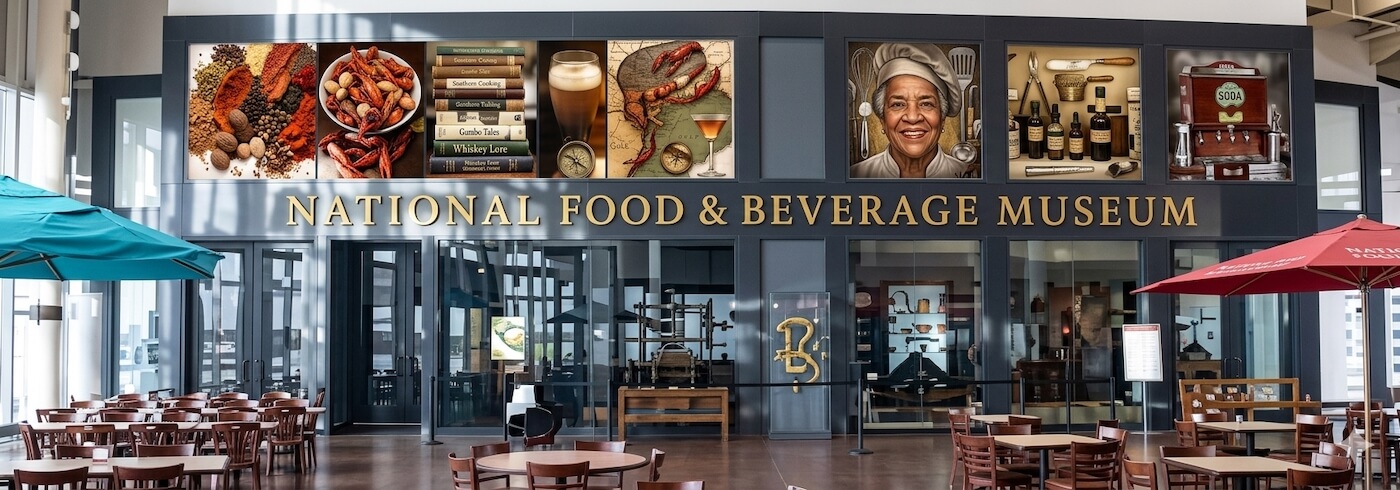
The Southern Food & Beverage Museum

Well, you knew there had to be a southern food museum somewhere, and there is! A great one!

Celebrate the food culture of the South by checking out The Southern Food & Beverage Museum online, or by visiting them in person in New Orleans!

The Southern Food and Beverage Museum is a nonprofit living history organization dedicated to the discovery, understanding and celebration of the food, drink and the related culture of the South.

…Not only are these guys collecting menus from every restaurant throughout the South and Southern-inspired restaurants everywhere in the world, they also create cool exhibits. Their newest exhibit, SPOILED by Tom Varisco, chronicles the tales that refrigerators told in the post-Hurricane Katrina clean-up.

Speaking of clean-ups, there is a great post at Southern Foodways on how the recent oil spill has effected the lives of folks who make their living on the water. Read it here.

Southern Foodways Goes Whole Hog

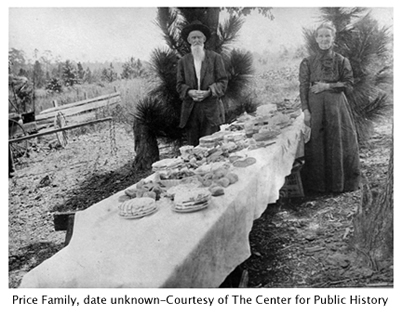
“Southern baking is not only a way of survival: it is an expression of love, empathy, and celebration. Food brings families together at mealtime, celebrates the gathering of communities at traditional “dinner on the grounds,” consoles friends when a loved one dies, and offers topic for conversation at holidays. It represents the resourcefulness and ties that bind southern families and communities together…”

Therefore, it makes sense that these traditions should be preserved for future generations…

The Center for Public History and The Southern Foodways Alliance have completed an oral history project exploring Southern baking traditions. They have conducted over thirty interviews, created a traveling exhibit, and conducted a number of public programs at their exhibit locations, finely tuned for the special audiences in their community.

Please enjoy exploring their diligent work at The Center for Public History, University of West Georgia (View the on-line exhibit here.)

And for hours of incredible education and entertainment, check out the The Southern Foodways Alliance‘s “Potlikker” documentary films online, here. With titles like “Whole Hog” and “Hot Chicken” you know can’t go wrong with these films!

Those Southern Staples – Biscuits and Cornbread

Thanks so much to the wonderful site Vegan Bliss from the Organic Goddess – promoting Veganism in Atlanta – this is new southern baking!

(originally published March 2002, in Co-options, the newsletter of Sevanada Natural Foods Cooperative in Atlanta, GA. http://www.sevananda.coop )

I come from a long, proud line of biscuit makers. My mother’s mother (Pansy) could make a pan of biscuits that you would swear could float off the plate. My mother (Jo) has always been convinced that her biscuits aren’t as good as Pansy’s, but they are. You find yourself reaching for the preserves just to have something to hold them down. Vegan biscuits were one of the things that I just had to get right, and now that I have, I’ll tell y’all the secrets.

Actually, making good biscuits isn’t hard; it’s just a matter of practice and keeping a few simple rules in mind. These are to a) choose a low gluten (low protein) flour, b) keep the ingredients cool or cold, c) handle the dough as little as possible, d) bake these items at a higher temperature than you might expect (400-450 F), and e) serve them hot – as soon as they’re ready. I usually try to make sure that everyone is seated at the table before I pull the pan out of the oven! (These rules also apply for scones, soda bread, and pie crusts.)

For those of you who are into the kitchen science thing – here are the reasons behind the rules:

a) Low gluten flour – This surprises a lot of people, since they’ve heard that high gluten flour is often called “bread flour”. What they don’t understand is that biscuits are not really “bread” in the classic sense – they are pastry. Look for flour that says “soft wheat” or “pastry flour”. “All-purpose” flour will be alright. Avoid “bread flour”. For truly light Southern-style biscuits, use a self-rising biscuit flour like White Lily. I don’t recommend this for everyday eating, of course, but biscuits are pretty high in fat, so I wouldn’t recommend them for everyday eating anyway.
b) Keep the ingredients cool – Pastry is often “short” or rich in shortening. Shortening is called that because it shortens the gluten strands in the flour, making the final product flaky and tender, rather than chewy like a yeast bread. In order to maximize the flakiness in your biscuits or other pastries, you want the fat (shortening) to remain in discrete units rather than melting into the flour. The small chunks of fat keep the flour layers apart and contribute to the overall flakiness of the product. I have cool hands, so I work my shortening in using my fingers during cool weather, but if your hands are warm, you’ll want to use a pastry cutter (which looks like a handle with a half-moon shaped set of wires or blades attached). If you leave your shortening in fairly large chunks, you’ll have very flaky biscuits, but they’ll fall apart. If you work all the shortening in until your flour resembles coarse cornmeal, your biscuits will be tender, but not flaky. For the best flaky-tender balance, work most of your shortening in until the flour looks like coarse corn meal, but leave a few pea-sized pieces of shortening as well.

I use a natural, non-hydrogenated, organic shortening made by Spectrum. Keep it cool, but not in the refrigerator. It gets soft at temperatures above 72F, but becomes almost unworkably hard below 60 F. Cool room temperature (68 F or so) keeps it at a perfect, workable texture.
c) Handle the dough as little as possible – This is related to the low-gluten flour rule. The protein in wheat is developed by kneading. When you are making a yeast bread, you want these sheets to develop so that they will trap the tiny bubbles of CO2 that the yeast gives off. That is what makes yeast bread rise, and gives it its distinctive chewy texture. If these gluten sheets are allowed to develop in biscuits, however, it makes them tough. Only knead your dough enough to incorporate all the dough into a mass. If this takes more than about 5 or 6 strokes, you need to add a bit more liquid.
d) Bake the biscuits at a high temperature – This allows the moisture in the biscuits to quickly turn into steam, which makes them puff up and gives them a lovely crust. Slower baking will make the biscuits tough, not light and crusty.
e) Serve them hot – while the steam is still escaping. It gives the biscuits that lighter-than-air quality.

Since St. Patrick’s Day is the 17th, I’m also including a simple vegan soda bread recipe. This one isn’t entirely traditional, since it includes both baking powder and baking soda, but it’s very tasty. Soda bread isn’t rich like biscuits, but all the same dough handling rules apply. I think of it as Irish hoecake!

The rules about high temperature baking and serving hot also go for cornbread, and I’ll include a recipe for that as well. My paternal grandmother (Theone) thought that it wasn’t a proper meal unless there were both cornbread and biscuits on the table. (Too bad her biscuits weren’t as good as Pansy’s!)

Old Fashioned White or Half-Whole-Wheat Biscuits

Recipe By: Lisa T. Bennett
Serving Size: 12
Preparation Time: 0:30

4 cups self-rising flour
1 cup Spectrum shortening
1 1/3 cups to 1 1/2 cups soymilk

Pre-heat oven to 450 F.

Cut shortening into flour until it resembles coarse meal with a few pea-sized pieces of shortening remaining. Mix in soymilk just until dough holds together. Press dough together lightly. Don’t overwork the dough or biscuits will be tough – 5 or 6 strokes should be enough or you should add more soymilk. It’s better to err on the side of too wet rather than too dry. Press dough out onto a floured board to 1/2 inch thick. Cut with a biscuit cutter or an old baking powder tin. Don’t twist the cutter! Doing so will cause the edges of the biscuits to seal and won’t allow them to rise properly. Bake in ungreased pan until lightly browned, 12 – 15 minutes.

Makes 12 medium-sized biscuits (enough for four moderately hungry adults).

—————
Notes: Placing the biscuits close together in the pan will cause them to rise up and will yield tall biscuits with soft sides (classic Southern biscuits). Leaving a little space between them with make them crusty all over and a bit shorter and wider. Using a larger cutter will give you what are often lovingly referred to as “cat-head biscuits” (the name simply refers to their size).

Don’t overbake the biscuits or they will lose their delicate flavor and become slightly bitter. They should be pale with light golden-brown highlights.

Variation: Half-Whole Wheat Biscuits. Substitute two cups plain unbleached flour and two cups whole wheat pastry flour for the self-rising flour. Add 4 teaspoons baking powder and one teaspoon salt to flour before cutting in shortening. These biscuits will be heavier than the white ones, but will have more fiber.

Another Variation: Substitute Earth Balance for Spectrum Organic Shortening for a more “buttery” flavor. Omit salt.

(For an all-whole-wheat biscuit recipe, see the March 2004 article “Down Home Cookin’ ”.)

Corn Bread

Recipe By: Lisa T. Bennett
Serving Size: 8
Preparation Time: 0:45

1 cup full-fat soy milk (unsweetened preferred, but regular okay.)
1 tablespoon apple cider vinegar
3/4 cup safflower or canola oil
1 1/2 cups cornmeal (white or yellow)
3/4 cup whole wheat pastry or unbleached all-purpose flour
1 tablespoon Ener-G egg replacer powder
2 teaspoons baking powder
1/2 teaspoon baking soda
1/2 teaspoon salt

Preheat oven to 450 F.

Mix soy milk and vinegar – let it sour. It will look lumpy and clabbered, like buttermilk.

Pour safflower oil into a cast-iron pan. Let it heat in the oven while you mix dry ingredients in a large mixing bowl. (If you don’t have a cast-iron pan, use an 8″ round cake pan or an 8″ X 8″ square pan.)

Pour oil into a well in the dry ingredients. Add the soured soymilk – mix quickly. Batter should be like thick cake batter. If too dry, add more soy milk (doesn’t have to be soured).

Pour batter in hot pan, place back in oven and bake until golden and crusty – about 20-25 minutes.
—————
Variations: add any or all of the following: a handful of corn kernels, diced red or green bell peppers, a tablespoon of diced jalapeños, or a teaspoon of diced or pureed chipotle peppers.

Pastriology

Now here’s a project we can get behind, considering it’s entirely based on pastry (both the good and the bad): “Pastriology,” a feature documentary by Alexis Krasilovsky.

SYNOPSIS:

Pastriology takes a global view of the perils and pleasures of pastry.  How can something that can make you sick and even kill you be such a sweet expression of cultural values and love?  Pastry is a luxury for some, a fast substitute for meals for others, and in today’s economy, it’s a comfort food for more and more Americans at a loss.  Pastriology addresses the planetary emergency of too little food, while seducing the viewer with the lavish traditions and beauty of pastry- and cake-making that call us back to the roots of our childhood.

For more information about the film, click here to visit the site.


Cafe Campesino turns out fresh muffins, scones, cookies daily…

Today, our hungry eye is on a coffee shop in Atlanta owned by our friend Maria Moore-Riggs, an extraordinary Southern baker!

Coffee and treats sweeten Sweet Auburn Market Cafe Campesino,
which turns out fresh muffins, scones, and cookies daily

By C.W. Cameron (For the AJC)

The popularity of a neighborhood coffee shop often has as much to do with its sweet treats as the quality of the coffee. Standing next to the pastry case while you’re waiting to order, it’s hard not to be tempted by something you see on display. How about a muffin with that cappuccino? A scone with your chai latte? A cupcake with your hot chocolate?…

Cafe Campesino is one of the newest coffee shops in town, open since November at the Sweet Auburn Curb Market in downtown Atlanta. Owner Maria Moore-Riggs has a background in professional baking and massage therapy and a master’s degree in psychotherapy. She says running a coffee shop calls on all her professional skills because it’s all about building relationships and nurturing people.

One of the ways she nurtures her customers is by freshly baking scones, cookies, biscotti and more each day. She turns out a surprising number of treats from a 2-by-3-foot counter and a microwave-size convection oven in a tiny corner of the shop.

Cafe Campesino is a partnership with the Americus-based coffee roaster of the same name. The 100-percent organic and fair trade coffee comes from a green coffee importing cooperative. The folks in Americus roast coffee every day, and once a week Moore-Riggs gets a delivery of freshly roasted beans…

For the complete article from Access Atlanta, click here.
Hummingbird Bran Muffins

Hands on: 15 minutes Total time: 35 minutes Makes: 12 muffins

These moist muffins play off the theme of that Southern favorite, the hummingbird cake made with coconut, banana and pineapple.

1 medium ripe banana
3/4 cup crushed pineapple with juice
1/2 cup plain nonfat or low-fat yogurt
1/3 cup agave nectar
2 eggs
1 teaspoon vanilla or coconut extract
1/3 cup coconut oil, melted
1/2 cup shredded coconut, unsweetened
2 cups wheat-bran flakes
3/4 cup unbleached all-purpose flour
1/2 cup whole-wheat flour
1 teaspoon baking powder
1 teaspoon baking soda
1/2 teaspoon salt
1/4 cup powdered sugar
2 teaspoons vanilla extract
1 teaspoon water

Directions

Preheat oven to 400 degrees. Line cups of a standard muffin tin with paper liners. Lightly coat with nonstick cooking spray.

In a medium bowl, mash banana to a smooth texture. Stir in pineapple, yogurt, agave nectar, eggs and extract and mix thoroughly. Add coconut oil and shredded coconut and stir until thoroughly combined.

In a large bowl, whisk together bran flakes, all-purpose flour, whole-wheat flour, baking powder, baking soda and salt. Pour banana mixture over dry ingredients and mix until just combined. Divide batter evenly among muffin cups. Bake for 15 to 20 minutes or until tops are golden brown and muffins spring back when touched. Remove to a rack to cool.

In a small bowl, stir together powdered sugar, vanilla extract and water. Using a pastry brush, lightly glaze the top of each muffin.

Adapted from a recipe by Cafe Campesino

Per muffin: 204 calories (percent of calories from fat, 35), 5 grams protein, 32 grams carbohydrates, 7 grams fiber, 9 grams fat (7 grams saturated), 36 milligrams cholesterol, 355 milligrams sodium.

Cocoa Mocha Love Cakes

Hands on: 10 minutes Total time: 25 minutes Makes: 8 cakes
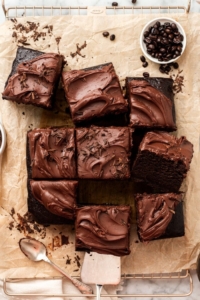
This vegan recipe makes an intensely chocolate treat that’s a cross between a cupcake and a brownie. Maria Moore-Riggs’ interesting take on classic chocolate ganache uses espresso instead of cream to make a shiny glaze for the cakes while staying away from dairy, and she tops each love cake with a tiny pink fondant heart. We tested this recipe with several kinds of chocolate chips, and grocery store staple Hershey’s worked best.

4 teaspoons espresso powder, divided
1/2 cup water, divided
1/2 cup canola oil
1/2 cup agave nectar
1 teaspoon vanilla extract
1/2 cup unbleached all-purpose flour
1/2 cup whole-wheat flour
1/2 cup cocoa
1/2 cup granulated sugar
1 teaspoon baking powder
1/4 teaspoon salt
1 cup semisweet chocolate chips, divided

Directions

Preheat oven to 350 degrees. Line 8 cups of a standard muffin tin with paper liners. Lightly coat with non-stick cooking spray.

In a small bowl, stir 2 teaspoons espresso powder into 1/4 cup water. Add oil, agave nectar and vanilla extract and stir until thoroughly combined.

In a medium bowl, mix together all-purpose flour, whole-wheat flour, cocoa, sugar, baking powder and salt. Add in espresso mixture and 1/2 cup chocolate chips and stir until just combined. Divide mixture evenly among the 8 muffin cups. Smooth tops, if necessary. Bake for 10 to 15 minutes or until just done. Do not overbake. Remove cakes to a rack to cool.

In a 1-cup heatproof measuring cup, dissolve 2 teaspoons espresso powder with 1/4 cup water. Heat for 1 minute in microwave. Stir in chocolate chips and let sit for 1 minute, then stir to melt chocolate. If chips aren’t completely melted, microwave in 20-second bursts and stir until mixture is smooth. Dip tops of the cooled cakes into the glaze.

Adapted from a recipe by Cafe Campesino

Per cake: 359 calories (percent of calories from fat, 50), 4 grams protein, 45 grams carbohydrates, 4 grams fiber, 21 grams fat (6 grams saturated), no cholesterol, 157 milligrams sodium.

Chai Spice Scones

Hands on: 10 minutes Total time: 30 minutes Makes: 10 scones
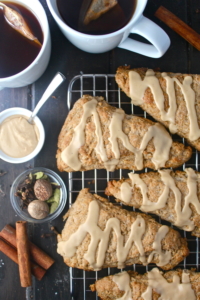
Get your favorite spicy chai flavors in a baked treat. Don’t overwork the dough or you’ll end up with tough scones.

2 cups unbleached all-purpose flour
1/2 cup granulated sugar
4 teaspoons baking powder
2 teaspoons ginger
1 teaspoon cinnamon
3/4 teaspoon salt
1/4 teaspoon ground cloves
1/8 teaspoon ground cardamom
6 tablespoons (3/4 stick) unsalted butter
3/4 to 1 cup heavy cream
1 egg
3 teaspoons vanilla extract, divided
1/4 cup powdered sugar
1 teaspoon water

Directions

Preheat oven to 400 degrees. Line a baking sheet with parchment paper and set aside.

In a medium bowl, mix flour, sugar, baking powder, ginger, cinnamon, salt, cloves and cardamom. Cut butter into 1-inch pieces and use a pastry blender to cut into flour mixture until butter pieces are the size of small peas.

In a small bowl, beat 3/4 cup cream, egg and 1 teaspoon vanilla extract. Pour over flour-butter mixture and use a fork to combine. Add additional cream, if needed, to make the mixture hold together.

Divide the dough into 10 equal pieces, form into 3-inch rounds and place on prepared baking sheet. Bake 15 to 20 minutes or until lightly browned. Remove to a rack to cool.

In a small bowl, stir together powdered sugar, remaining 2 teaspoons vanilla extract and water. Using a pastry brush, lightly glaze the top of each scone.

Adapted from a recipe by Cafe Campesino

Per scone: 279 calories (percent of calories from fat, 46), 4 grams protein, 34 grams carbohydrates, 1 gram fiber, 14 grams fat (9 grams saturated), 64 milligrams cholesterol, 371 milligrams sodium.

It smells good in here….

As far as we’re concerned, there is nothing better than Southern style baking.  That means breads, biscuits, pies, cakes and cookies.  The South is a big place, and its foodways have influenced people all over America – all over the world for that matter.  While we will celebrate traditional Southern baking in a big way here, we have an eclectic approach to cooking, baking and eating, so you can expect to find a great many variations on a Southern theme in these pages.

If you bake, if you have recipes passed down to you by family and friends, if you want to let us know about the best bakers, bakeries and restaurants that bake, we want to hear from you.  Write to us.  Send pictures.  We’re always hungry!